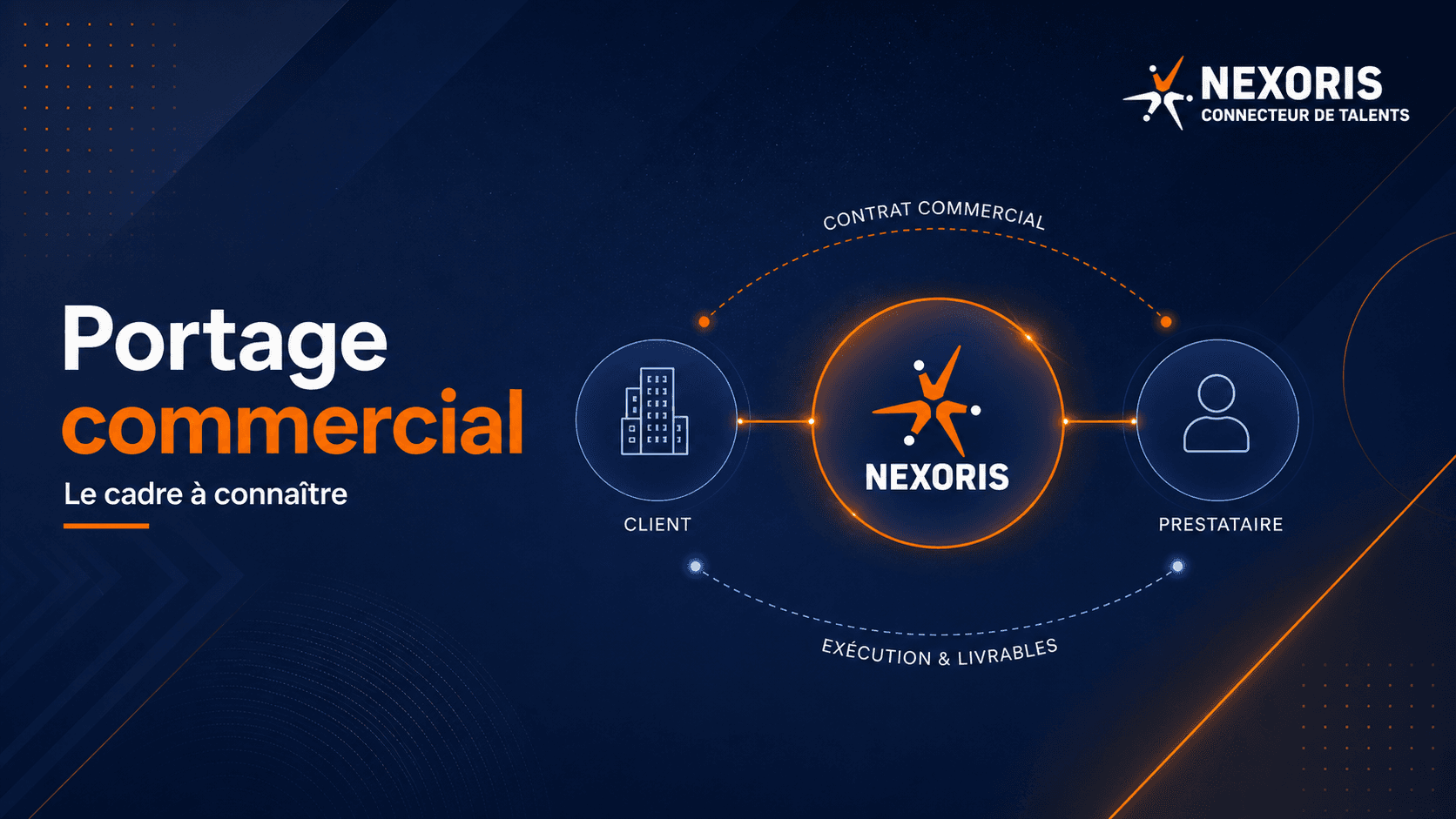
Often confused with Third Parties Umbrella Services, Payroll Management Services has become in recent years an essential solution for companies looking to optimize the management of their suppliers and service providers. Are you a company or a Key Account wondering how to: improve the governance of your supplier panel, improve and optimize the work of your internal teams? Payroll Management Services, sometimes also known as administrative outsourcing, is the solution to streamline and manage every aspect of the relationship with your various suppliers, which can represent a significant number for some companies.
What are Payroll Management Services?
It delivers a highly practical and flexible service to Key Account clients seeking to streamline their supplier panel while preserving the agility, flexibility and speed of execution needed to call on specific skills.
For a service provider, Payroll Management Services is a way to deliver work to Key Accounts even when they are not part of the approved supplier panel, by leveraging the services of an approved intermediary.
In practice, this means proposing, for a given client need, the resources of an unlisted company or an independent consultant, who will then operate as a subcontractor of an approved company.
What needs does this practice address?
In recent years, with the goal of streamlining their processes, the procurement teams for professional services in large groups have set up panels of approved suppliers, selected based on the specifics of their service offerings to provide the skills of external resources that strengthen internal teams or support the transformation projects of these large groups.
The goal of these panels is also to consolidate purchase volumes across a smaller number of suppliers and therefore obtain better purchasing terms.
Restricting the supplier list also has the advantage of limiting the costs of administrative management, supplier accounting and tracking the administrative compliance of providers.
What are the benefits of Payroll Management Services for client companies?
In a number of cases, the IT or operational departments of large groups, which are the heaviest users of external resources, can find themselves in situations where the approved supplier panel does not meet their needs. This can happen for several reasons:
- Shortage of available resources in a standard skill area among approved suppliers.
- Needs that require new skills outside the standard skill area of approved suppliers.
- A desire to engage identified providers outside the approved supplier panel, such as independent consultants, training organizations, coaches and so on.
In these situations, using one or a few approved suppliers to host the contractual relationship with providers able to offer the desired skills offers several advantages:
- It saves time when onboarding new skills so they become quickly operational and productive, without having to go through a vendor approval process.
- It saves all or part of the cost of a new vendor approval, the end-to-end processing cost of which can exceed 100,000 euros.
- It allows the administrative compliance tracking of providers to be delegated to the payroll management intermediary.
- It also makes it possible to test the hosted provider, with a view to formal approval later on.
What are the benefits of Payroll Management Services for service providers?
As a mirror of what was just described, for a company not approved by a large group, Payroll Management Services offers many benefits across several situations.
Young companies generally do not meet all the criteria defined by procurement departments to join an approved supplier list. Three fiscal years of activity are often required before being added to a supplier list.
Joining an approved supplier list can also represent significant time and cost.
- Time spent assembling the application, which is not always compatible with the timing of the client's need. Payroll Management Services therefore makes it possible to start new engagements within hours or days, whereas an approval process can take several months.
- Cost, due to the client applying rate cards or year-end rebates. In this respect, Payroll Management Services can, at least temporarily, provide some breathing room before fully joining a supplier list.
How long should a Key Account and a service provider rely on Payroll Management Services?
There is no single answer. The answer is generally one of the following:
- Indefinitely: when the provider only delivers occasional engagements, or for low business volumes.
- Less than a year: when Payroll Management Services is used from the outset to set up a future approved supplier status while enabling a fast start of the engagements.
- For a while: in this case, the client will assess the hosted provider's ability to deliver consistently and satisfactorily over time. After 5 to 10 engagements, it may be worth setting up a formal approval.
What is the cost of Payroll Management Services?
Here too, several answers are possible. Either simple solutions are put in place, or more complex ones.
Simple solutions consist of taking a percentage of client revenue as a payroll management commission and passing the rest on to the provider. The cost itself can vary widely.
- Some approved suppliers offer Payroll Management Services on a marginal basis, alongside their core service delivery business. They may charge between 10% and 20% of client revenue.
- Among the players who have made this their core business, rates can range between 4% and 8% of payroll management fees.
- We are seeing the market shift towards flat rates rather than a percentage of client revenue. For example, payroll management could cost 30 euros excluding VAT per day. For an average daily rate of 600 euros, that works out to 5%, and 3% for an average daily rate of 1,000 euros excluding VAT.
Depending on the client, the cost of Payroll Management Services may be borne by the client (this is referred to as a mark-up), who pays a commission on top of the rate negotiated with the hosted provider, or by the hosted provider (this is referred to as a mark-down), who has the host's commission deducted from the rate negotiated with the client.
More complex solutions consist of applying both a mark-up and a mark-down.
- A mark-down is applied to the hosted provider relative to the rate negotiated with the client. The provider pays the cost of being on the approved supplier list.
- A mark-up is applied to the client, who may pay for various services, such as the host's tender management platform if that is part of its services, or part of the intermediation cost where it is shared between the client and the hosted provider, or even a provision for year-end rebates when procurement wants to externalize a discount.
- In these more complex cases, mark-up and mark-down can be expressed as a percentage of the negotiated rate, or as flat commissions.
What can a non-approved provider expect from a Payroll Management Services company?
A Payroll Management Services provider should be an intermediary that makes business easier. A hosted provider, like a client, should therefore expect from it:
- Strong responsiveness in handling requests for proposals (RFPs)
- Fair behavior, by not using RFPs to position its own resources
- Proactive and transparent monitoring of contract renewals
- No non-compete clauses
- Reliable, on-time payments
- The option of early payment of services
- A broad enough client base and balanced revenue across clients, giving the hosted provider the opportunity to work with multiple clients without being exposed to the risk of economic dependency that could arise from too narrow a client base.
- Rigor and consistency in tracking the administrative compliance of hosted providers.
Payroll Management Services and Third Parties Umbrella Services: what are the differences?
These two services are sometimes confused, but although they can be complementary, they have nothing in common.
On this topic, we refer you to a previous article for more details
As we have seen, Payroll Management Services is the best way to deliver work to a client where you are not approved, by leveraging another company's approved supplier status. Third Parties Umbrella Services, on the other hand, is a service that handles all the administrative activities related to the work of an independent consultant who chooses not to set up their own company to deliver their services. Only an Umbrella company can offer these services.
Under French labor law, an Umbrella company must focus solely on this activity and may not engage in Payroll Management Services or talent sourcing. By the same token, a Payroll Management Services company cannot deliver Third Parties Umbrella Services.
As we have seen, Payroll Management Services delivers several benefits for all parties involved, whether it is the end client, the approved provider, or the company managing the engagement. It saves time for every actor in this three-way relationship and establishes a secure, trust-based partnership. All while giving smaller players the opportunity to deliver high-quality services to large groups, and giving these groups access to suppliers they might not have considered because they were not previously on their approved supplier list. It is therefore a reliable way for Key Accounts to call on specialized expertise to help bring their projects to life.
Have you already identified a partner or service provider, and want to delegate and offload all the administrative and legal work?
Consider Payroll Management Services by Nexoris.
Contact us